Key criteria for selecting epoxy systems based on stone variety, oven type, ambient temperature, and target curing time.
The primary prerequisite for achieving high surface quality and low waste rates in natural stone processing plants is selecting an epoxy system matched to the mineralogical structure of the stone and the factory’s line conditions. Pore structure, capillary crack depth, stone color, and oven type (multi-deck oven, tunnel oven, microwave, or natural curing) must be evaluated together.
Technical & Corporate Focus
Impact of Pore Structure, Viscosity, Mixing Ratio, and Curing Conditions on Production Quality
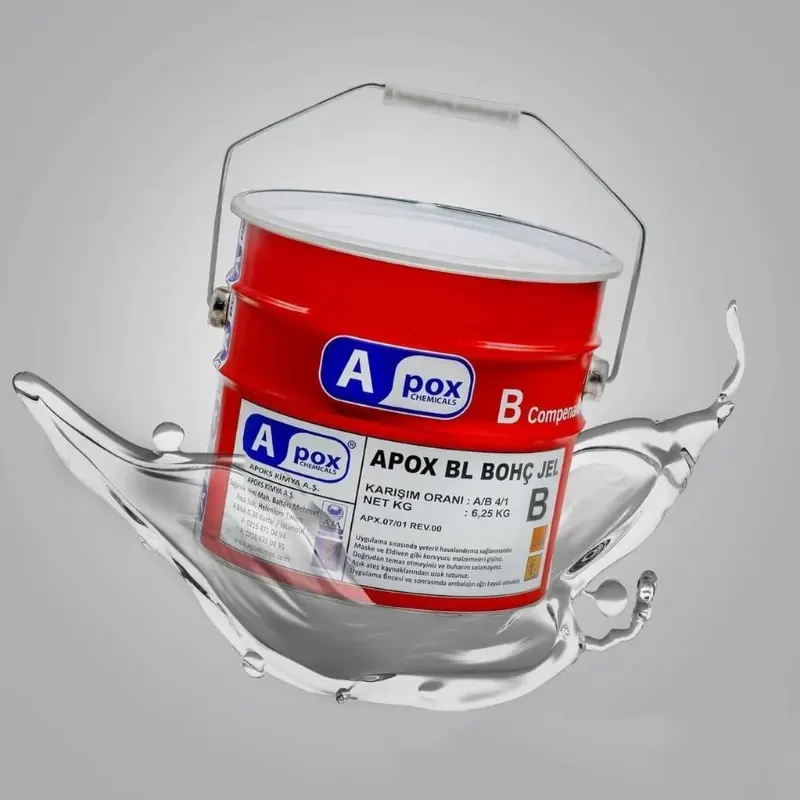
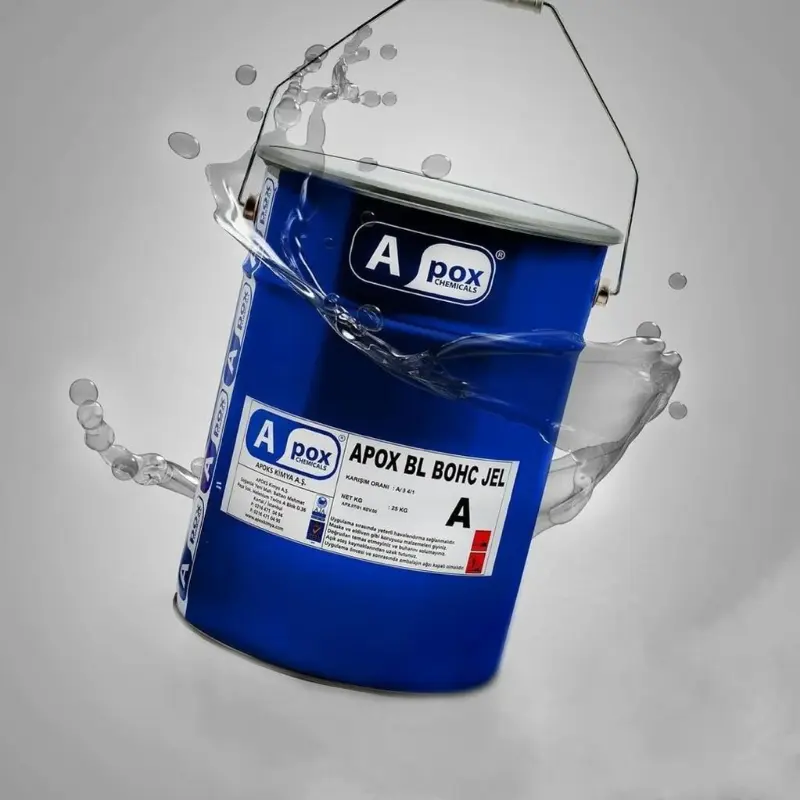
Low-viscosity epoxy systems (such as the APOX Ultra and Diamond series) penetrate deep into micro-cracks to reinforce the stone from within. On wide-pored, travertine, or cavernous stone surfaces, non-sagging thixotropic epoxy gel and polyester filling systems offer superior form retention.
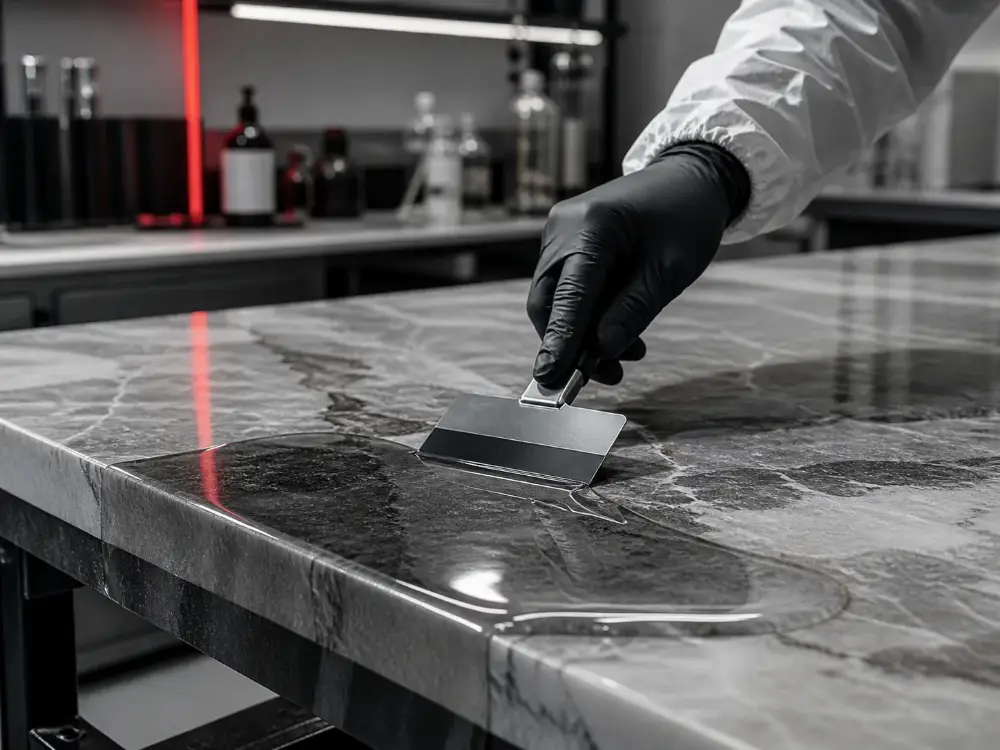
Prior to application, ensuring that the slab surface is completely free of moisture and dust, and homogeneously mixing the resin and hardener components at the exact weight/volume ratios specified in the technical data sheet (e.g., 4:1 or 3:1) are of critical importance.
To achieve optimal results on specialized stone groups or newly commissioned oven lines, conducting sample validation and field testing with the APOX Kimya technical support team is recommended.
Field Experience & Integrated Product Ecosystem
Viscosity & Penetration: High-penetration resins with low CPS values should be preferred for marbles with capillary cracks.
Color & Yellowing Resistance: The Diamond series with specialized UV/heat stabilizers should be used on white, crystalline, and light beige stones to prevent discoloration.
Mixing & Curing Discipline: Because ambient and stone surface temperatures directly affect gel time, a hardener compatible with the oven regime must be selected.
Production & Application Gallery